Webb Rewrites History

Pardeep Singh
| 24-07-2026
 · Science Team
Hi, Readers! The James Webb Space Telescope is doing the cosmic equivalent of opening a dusty attic trunk and finding out the family story was missing half the pages.
With its powerful infrared vision, Webb is peering farther back in time than earlier telescopes could manage, catching light that has traveled across the universe for ages. What it is finding is not just pretty sky candy.
It is forcing astronomers to rethink how the earliest galaxies formed, how quickly stars appeared, and what the young universe was really like when it was just getting started.
Webb is built to detect infrared light, which makes it especially good at spotting very distant objects. As the universe expands, light from ancient galaxies gets stretched, shifting into the infrared range. That means Webb can see objects from the universe’s early chapters that other observatories had trouble reading. It is like trying to read a note written on a balloon after the balloon has been stretched across a room. Webb has the right glasses for that job.
Ancient Galaxies, Too Soon
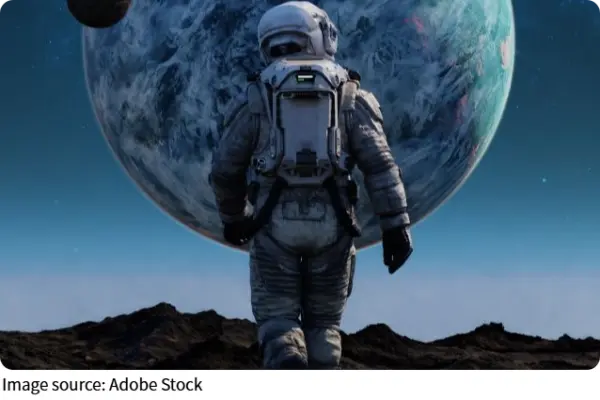
One of the biggest surprises is the number of bright, massive galaxies showing up very early in cosmic history. According to earlier models, those galaxies should have taken longer to grow. Instead, Webb is seeing candidates that appear to have formed surprisingly fast, when the universe was still very young. That has astronomers checking their assumptions, because the timeline now looks less like a slow simmer and more like a microwave dinner that somehow came out fully cooked.
These observations do not mean everything we knew was tossed out the window. They do mean some long-standing models may need adjusting. Scientists are now studying whether these galaxies really are as massive as they look, whether their stars formed at unusual rates, or whether there are details in the data that point to other explanations. Webb is not tossing the rulebook into the trash. It is scribbling all over the margins.
Star Birth and Early Light
Webb is also helping researchers study the first generations of stars and the process called reionization, when energetic light transformed the early universe. This era matters because it changed the universe from a foggy place filled with neutral hydrogen into one that let light travel more freely. Webb’s observations are helping astronomers pin down which galaxies may have driven that change.
The telescope can examine the makeup of early galaxies by breaking their light into spectra, which reveal clues about temperature, motion, and chemical composition. This lets researchers look at how galaxies formed stars, what kinds of elements were present, and how quickly these systems evolved. It is a bit like hearing a song and then isolating each instrument to figure out who is playing what. Webb turns distant smudges into stories with details.
Black Holes and Big Questions
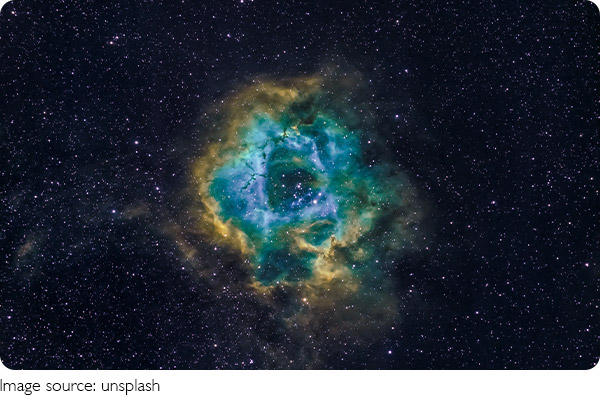
Another area where Webb is stirring the cosmic soup is the study of enormous black holes in the early universe. Some appear to have grown much faster than expected. That raises major questions about how black holes formed and how they became so large so quickly. Scientists are exploring several ideas, including whether the seeds of these black holes started bigger than once thought or whether they had especially efficient growth early on.
Webb is also revealing how black holes and galaxies may have evolved together. That relationship is important because black holes can influence star formation and the structure of their host galaxies. When Webb spots active galactic centers in distant galaxies, it gives researchers valuable clues about how these giant systems developed side by side in the young universe.
A New Cosmic Draft
The exciting part is that Webb is not delivering neat little wrapped gifts with labels already attached. It is delivering evidence, and scientists are doing the hard work of testing, debating, and refining ideas. Some early findings will hold up. Others may shift as more observations come in. That is how science works when a powerful new tool arrives. First comes the surprise, then comes the detective work.
So, what is Webb really showing us? That cosmic history may be messier, richer, and more surprising than many expected. The early universe was not a sleepy opening act. It may have been bustling from the start, packed with rapid galaxy growth, intense star formation, and giant mysteries waiting in the dark. Keep your eyes on Webb, because this telescope is not just adding footnotes to the story of the universe. It is helping write a lively new draft, and honestly, it sounds a lot more interesting.