Vanilla Panna Cotta

Caleb Ryan
| 14-05-2026
 · Food Team
Panna cotta has a reputation for being a restaurant dessert — the kind that arrives on a pristine white plate, quivering slightly when set down.
The truth is it's one of the most forgiving things you can make at home.
No eggs, no oven, no baking. Just cream, milk, sugar, gelatin, and vanilla. Fifteen minutes of actual cooking, a few hours in the fridge, and you're done.
Ingredients (Serves 6)
1½ cups (360ml) heavy cream
1 cup (240ml) whole milk
¼ cup (50g) granulated sugar
1 teaspoon vanilla bean paste (or 1 vanilla bean, split and scraped)
2¼ teaspoons (7g) unflavored gelatin powder
3 tablespoons cold water
Bloom the Gelatin First
Pour the cold water into a small bowl and sprinkle the gelatin over the surface evenly. Let it sit for 5 minutes without stirring. It will absorb the water and turn spongy — that's exactly what you want. This step is called blooming, and it ensures the gelatin dissolves completely and smoothly into the cream later.
One non-negotiable rule: never let the gelatin boil. Temperatures above 140°F start breaking it down, and boiling destroys it entirely.
Heat the Cream Mixture
In a medium saucepan, combine the heavy cream, whole milk, sugar, and vanilla paste. Heat over medium heat, stirring occasionally, until the sugar dissolves and the mixture just starts to steam — small bubbles at the edge, not a full boil. Remove from heat immediately.
Add the bloomed gelatin to the warm cream and whisk gently until fully dissolved. No lumps, no graininess.
Cool Before Pouring
This step matters. Let the mixture cool at room temperature for about 15–20 minutes before pouring into your molds. If you pour it while still hot, the vanilla seeds will sink to the bottom and the surface may wrinkle as it sets unevenly. Slightly cooled, the mixture is still pourable but more stable.
Lightly grease your ramekins, pudding molds, or small glasses with a neutral oil — just a thin film on the inside. This is what lets the panna cotta slip out cleanly later.
Pour the mixture evenly into 6 molds and refrigerate for at least 4 hours, overnight is better.
Unmolding and Serving
To unmold, run a thin blade around the edge of each ramekin. Set the base in warm water for 3–5 seconds — no longer — then invert onto a plate. If it doesn't release, a few more seconds in the warm water should do it. It should drop out cleanly and sit with that beautiful gentle wobble when the plate is moved.
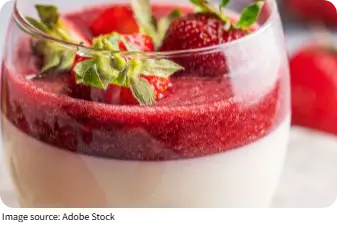
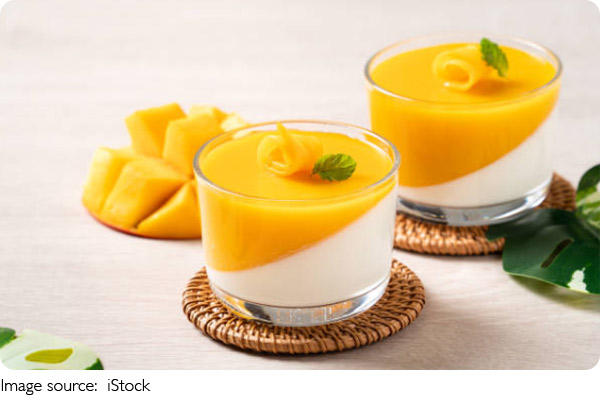
If unmolding feels stressful, simply serve in the glass — top with a spoonful of berry compote, caramel sauce, or fresh fruit and call it done. Both versions taste identical.
What Makes the Texture Work
The ratio of cream to milk is key. The standard 1:1 version results in something firmer and slightly watery. Pushing it to a 3:2 cream-to-milk ratio — which this recipe uses — gives you that velvety, melt-on-the-tongue quality without crossing into rubbery or overly stiff. And pulling the saucepan off the heat before it reaches a full boil is what keeps the texture silky rather than grainy.
It keeps perfectly in the fridge for up to a week, covered. Honestly one of the best make-ahead desserts out there.