Panda Contrast
Finnegan Flynn
| 16-03-2026
 · Animal Team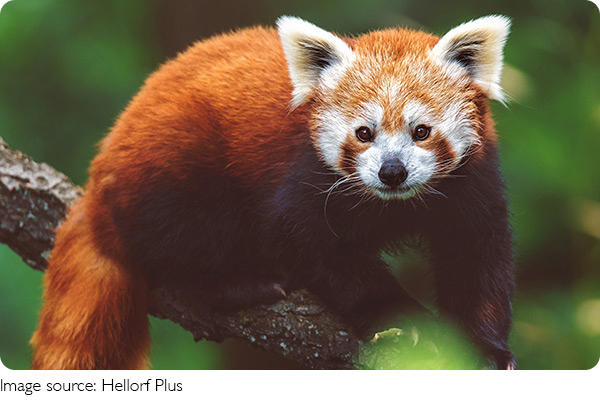
Red pandas and giant pandas are often lumped together because of their shared name and love of bamboo, but the reality is far more fascinating.
Imagine spotting a small, bushy tailed creature nimbly climbing a tree, while somewhere below, a robust black-and-white bear slowly munches bamboo — two animals, two worlds, yet bound by an unlikely common diet.
Physical Appearance and Size
Red pandas and giant pandas look strikingly different at first glance.
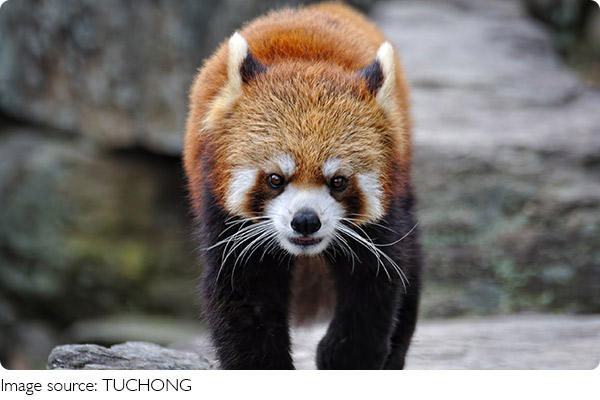
Red pandas are small, roughly the size of a domestic cat, with long, bushy tails that help them balance in trees. Their reddish-brown fur and light head markings provide camouflage in forest canopies. In contrast, giant pandas are large, heavy bears, with iconic black patches around their eyes, ears, and limbs. Their stout build supports a mostly terrestrial lifestyle and allows them to consume massive quantities of bamboo each day.
Habitat and Range
Both species inhabit mountain forests, but their preferences diverge sharply.
1. Red pandas thrive in high-altitude temperate forests, often above 2,000 m, favoring dense tree cover where they can climb and forage safely.
2. Giant pandas live in bamboo forests at slightly lower elevations, relying on thick undergrowth for food and shelter.
Although some geographical overlap exists, the two species rarely encounter each other due to different forest strata preferences — arboreal versus ground-dwelling.
Dietary Habits
While bamboo dominates both diets, feeding styles differ.
1. Red pandas eat mainly bamboo leaves and shoots, supplementing with fruits, berries, insects, and occasional small rodents.
2. Giant pandas consume large quantities of bamboo, including stems, shoots, and leaves, spending up to 14 hours a day feeding to meet energy demands.
Both species share a specialised “pseudo-thumb,” an extended wrist digit that allows precise bamboo grasping.
Behaviour and Lifestyle
Behaviour highlights their contrasting life strategies.
1. Red pandas are crepuscular, most active at dawn and dusk, and are highly agile climbers, often resting in tree branches during the day.
2. Giant pandas are mostly terrestrial, spending their time feeding and resting on the forest floor. They are solitary but generally peaceful, interacting mainly during mating seasons.
Despite differences, both rely on scent marking and subtle communication to navigate their environments.
Conservation and Reflection
Both species face threats from habitat loss, human encroachment, and climate change, but their needs differ. Red pandas require tree-rich habitats for climbing and safety, while giant pandas need extensive bamboo forests to sustain themselves.
Understanding the differences between these pandas reminds us that nature's diversity is intricate. Even animals sharing a name can evolve in vastly different ways, yet converge on similar survival adaptations. Protecting them is more than preserving a cute face; it is about safeguarding unique ecological roles and the delicate balance of their mountain homes. Observing both species inspires respect for life's complexity and motivates conservation efforts that value both the familiar and the unexpected.